Notice on Website Update
We recently updated the language on our website to ensure that everything we describe is clear, accurate, and easy for the public to understand. These updates are only changes in wording, not in our work.
Since its establishment, the Islamic Tribunal has operated exclusively as a faith-based body offering voluntary, non-binding religious guidance. Our religious practices and services have remained exactly the same from the beginning.
The update was made solely to eliminate public confusion and to accurately describe our long-standing mission and activities within the protections of U.S. and Texas law. All of our guidance is spiritual in nature, voluntary, and has no legal effect in any court.
About Us
Members of every community face personal and family challenges that can benefit from compassionate listening and faith-based guidance. The Islamic Tribunal was established to offer religious counseling and non-binding faith-based guidance for individuals who voluntarily seek support grounded in Islamic ethical values.
Our purpose is to help individuals and families find clarity and emotional comfort in a respectful and confidential environment. We provide a place where people can speak openly about their concerns and receive religious perspectives based on Islamic teachings.
Our work is spiritual, pastoral, and non-legal. We do not act as a court and we do not issue any rulings that have legal effect. Everything we do is carried out fully within the protections of the First Amendment and in full compliance with the laws of the United States and the State of Texas.
Legal Status and Scope of Services
The Islamic Tribunal, LLC is a legally registered limited liability company in the State of Texas. Our activities are strictly limited to providing voluntary religious counseling and faith-based guidance. We do not:
- engage in the practice of law
- function as a civil or criminal court
- issue legally binding rulings or decisions
- provide legal advice or legal representation
Any religious guidance, religious decision, or religious opinion we offer is:
- spiritual only
- non-binding in all civil courts
- for religious purposes within the Islamic faith
All legal matters — including civil divorce, child custody, child support, property division, inheritance, and business disputes — must be resolved through licensed attorneys and the appropriate state or federal courts.
Core clarification (as recommended by counsel):
The Islamic Tribunal provides voluntary, non-binding religious guidance only. We do not replace civil courts, and nothing we issue has any legal effect under Texas or U.S. law. All civil matters, including divorce, custody, property, inheritance, and business disputes, must be resolved through the appropriate court system or licensed attorneys.
Faith-based guidance bodies such as Jewish Beth Din panels and Christian religious tribunals have served their communities in the United States for generations. The Islamic Tribunal follows this same tradition of voluntary spiritual support, while fully respecting American law and never interfering with the authority of civil courts.
Our Work Focuses On:
- Providing religious and faith-based guidance for personal and family concerns
- Offering spiritual perspectives rooted in Qur’anic ethics and Prophetic teachings
- Supporting individuals through compassionate listening and pastoral care
- Encouraging communication, understanding, and reconciliation within families and communities
- Issuing non-binding religious guidance, religious opinions, or religious decisions for religious purposes only and with no legal authority or legal effect
Our Commitments:
- Transparency – Clear and honest description of what we do and what we do not do
- Respect – Treating all participants with dignity, courtesy, and fairness
- Compliance with Law – Full respect for U.S. and Texas law and the authority of civil courts
- Confidentiality – Protecting the privacy of those who seek religious guidance, within the limits of the law
- Integrity and Compassion – Serving our community with sincerity, empathy, and professional care
The Islamic Tribunal is a voluntary religious resource for individuals seeking faith-based guidance. It complements, and never replaces, the legal, social, and professional services available in American society.
General Disclaimer
This website does not provide legal advice.
The Islamic Tribunal is not a law firm, and none of its members provide legal advice in their capacity with the Tribunal. All information, content, and materials on this website are for general informational and religious purposes only.
Nothing on this site should be interpreted as:
- legal guidance
- legal conclusions
- a substitute for professional legal counsel
Readers and visitors are strongly encouraged to consult a licensed attorney for advice regarding any legal matter. No user should act, or refrain from acting, on the basis of information found on this website without seeking proper legal counsel in the relevant jurisdiction.
Only your personal attorney can determine whether any information mentioned here applies to your specific situation.
All liability for actions taken or not taken based on the content of this website is expressly disclaimed. All materials are provided “as is,” without any guarantees of accuracy, completeness, or error-free content.
Clarification of Mission and Activities
The Islamic Tribunal wishes to clearly explain the nature and limits of its work.
The Islamic Tribunal does not function as a court of law and does not issue legally binding judgments, decrees, or enforceable decisions. Our role is limited to providing voluntary, faith-based religious guidance and religious consultation to individuals who seek spiritual perspectives on personal or family matters.
Any issue requiring legal authority, civil enforcement, or judicial action must be handled by the Texas court system or other appropriate courts, which remain the sole and final authorities for all legal decisions. The Islamic Tribunal does not replace, override, imitate, or claim any jurisdiction parallel to state or federal courts.
Faith-based guidance bodies such as Jewish Beth Din panels and Christian religious tribunals have long operated in the United States under the protections of the First Amendment. The Islamic Tribunal follows this same constitutional tradition, offering non-binding spiritual support only, in full respect of U.S. and Texas law.
Our work focuses exclusively on religious guidance, community support, and faith-based discussion. We remain committed to transparency, cooperation with public authorities when appropriate, and full compliance with all applicable laws.
Religious Divorce Guidance and Its Purpose Within Our Community
A significant portion of the requests received by the Islamic Tribunal relates to religious divorce and faith-based marital guidance, especially from Muslim women who seek spiritual clarity regarding their marital status in accordance with Islamic teachings.
Many women seek religious divorce guidance to obtain religious clarity regarding their marital status within Islam, independent of civil court proceedings.
In the State of Texas, civil divorce is handled exclusively by the courts and determines all legal rights and obligations, including matters of property, custody, and child support. The Islamic Tribunal does not issue civil divorces and does not decide or affect any legal rights.
At the same time, many community members seek religious guidance to determine whether they are religiously considered divorced and therefore eligible to remarry within the Islamic faith.
This religious divorce guidance determines religious eligibility for remarriage within the Islamic faith only.
This religious decision is binding for religious purposes only and has no legal effect under Texas or U.S. law.
A religious divorce does not require completion of a civil divorce; however, it does not replace or substitute for a civil divorce. All civil divorce procedures and legal consequences must be handled through the appropriate courts.
This spiritual aspect has no legal effect under U.S. or Texas law, yet it holds meaningful value for individuals who wish to practice their faith fully and responsibly. This is similar to Catholic annulment processes or Jewish Beth Din religious determinations, which are significant within those faith traditions while having no independent civil legal effect.
Our role in religious divorce matters is strictly limited to offering voluntary, faith-based guidance within a confidential and respectful setting. We do not:
- issue civil divorce decrees
- enforce property division
- decide child custody or child support
- participate in any civil court process
Any written religious divorce confirmation issued by the Islamic Tribunal is provided solely for spiritual purposes and may not be used as a civil divorce decree or legal determination.
By providing this religious service, we aim to support community members—particularly women who may experience difficulty obtaining religious closure—so they may move forward spiritually with dignity, clarity, and peace of mind.
Our work complements, but never replaces, civil marriage and divorce procedures. We remain fully committed to transparency, respect for the law, and serving our community with compassion and integrity.
Our role in religious divorce matters is limited to faith-based determination and spiritual guidance, without any legal authority or civil enforcement.
Meet the Imams
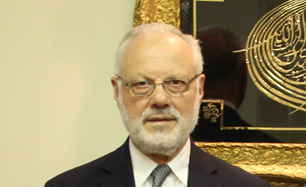
Founding Member • Faith-Based Consultant. Dr. Taher El-Badawi is one of the founding members of the Islamic Tribunal and has dedicated many years to Islamic education and community service. He holds
Advisory Chair • Community Scholar. Sheikh Mohamed AlGebaly has been a community leader and educator in North Texas for many years. He currently serves as the Imam of the McKinney Islamic Associatio
Founding Scholar • Senior Religious Mentor (Former). Imam Yusuf Kavakci is widely respected for his decades of scholarship and community service. Born in Turkey, he memorized the Qur’an at a young
Faith-Based Family Advisor (Former Advisory Role). Imam Moujahed Bakhach is one of the community leaders who has contributed to the development of the Islamic Tribunal as a faith-based, non-binding me